From Vast to Inviting: How to Make a Large Home Feel Warm
How do I make a very large home feel warm rather than empty?
It is one of the most common challenges in large-scale residential design – and one that has no single answer.
Warmth is not something applied at the end of a project. It is included from the very beginning – through spatial planning, considered proportions, layered materials and light. At Hill House Interiors, co-founders Helen Bygraves and Jenny Weiss have applied this thinking across more than two decades of award-winning residential work, shaping grand homes that feel genuinely liveable rather than merely impressive.
How to start: space planning in large homes
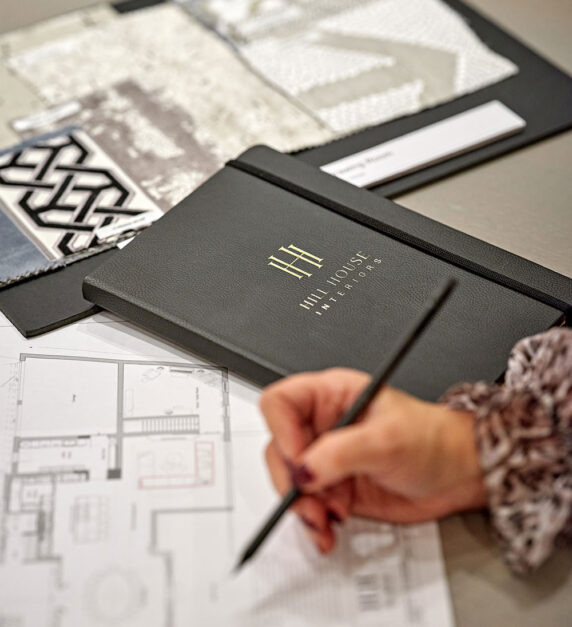
Every project starts with understanding how the home will be lived in. Before we consider materials or furniture, we define what each area needs to do.
In large, open-plan spaces, the risk lies in leaving areas undefined. We avoid this by carefully programming each zone, ensuring there is clarity of purpose throughout the home. A seating area might be positioned to capture natural light, a reading corner shaped around a joinery detail, or a dining space anchored in relation to circulation routes.
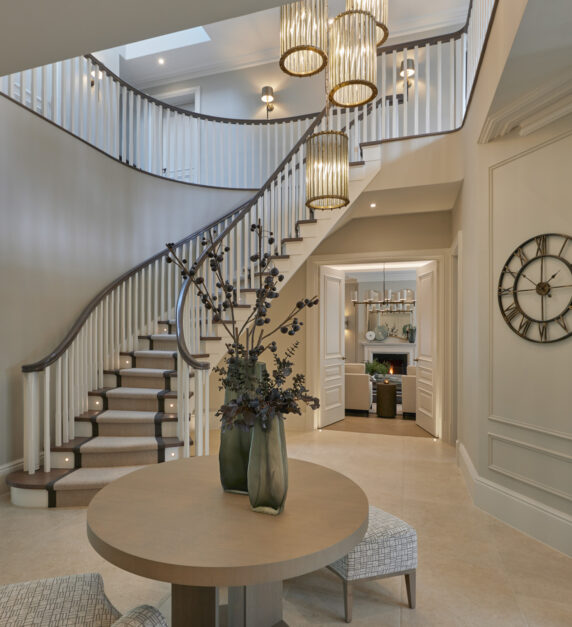
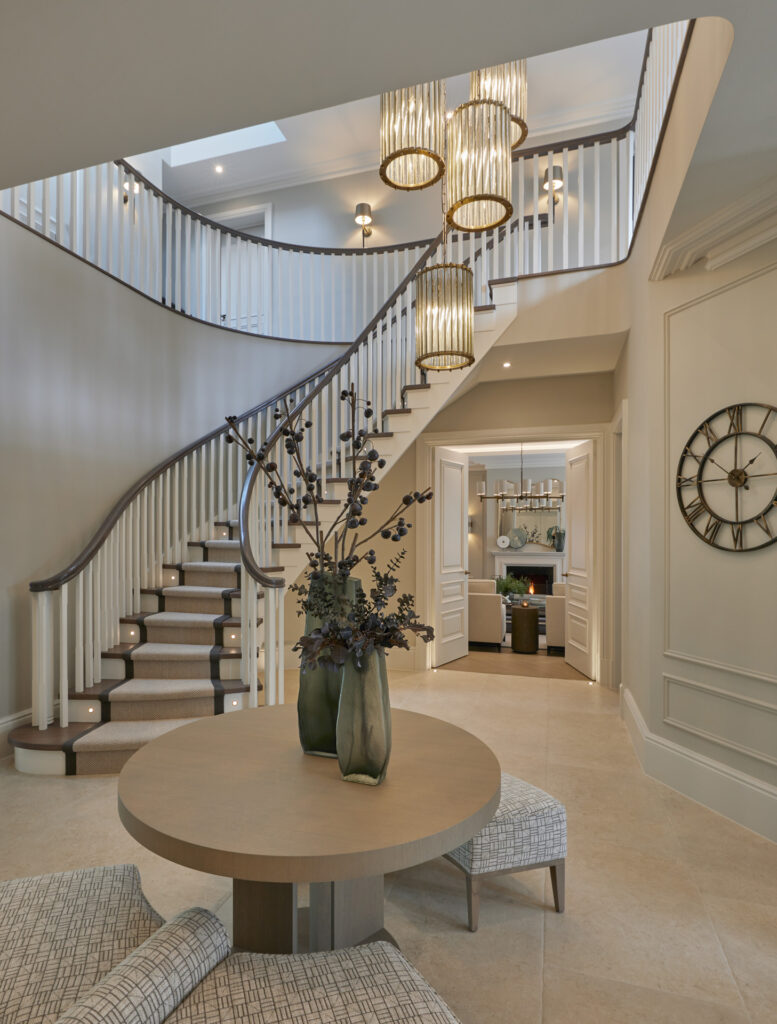
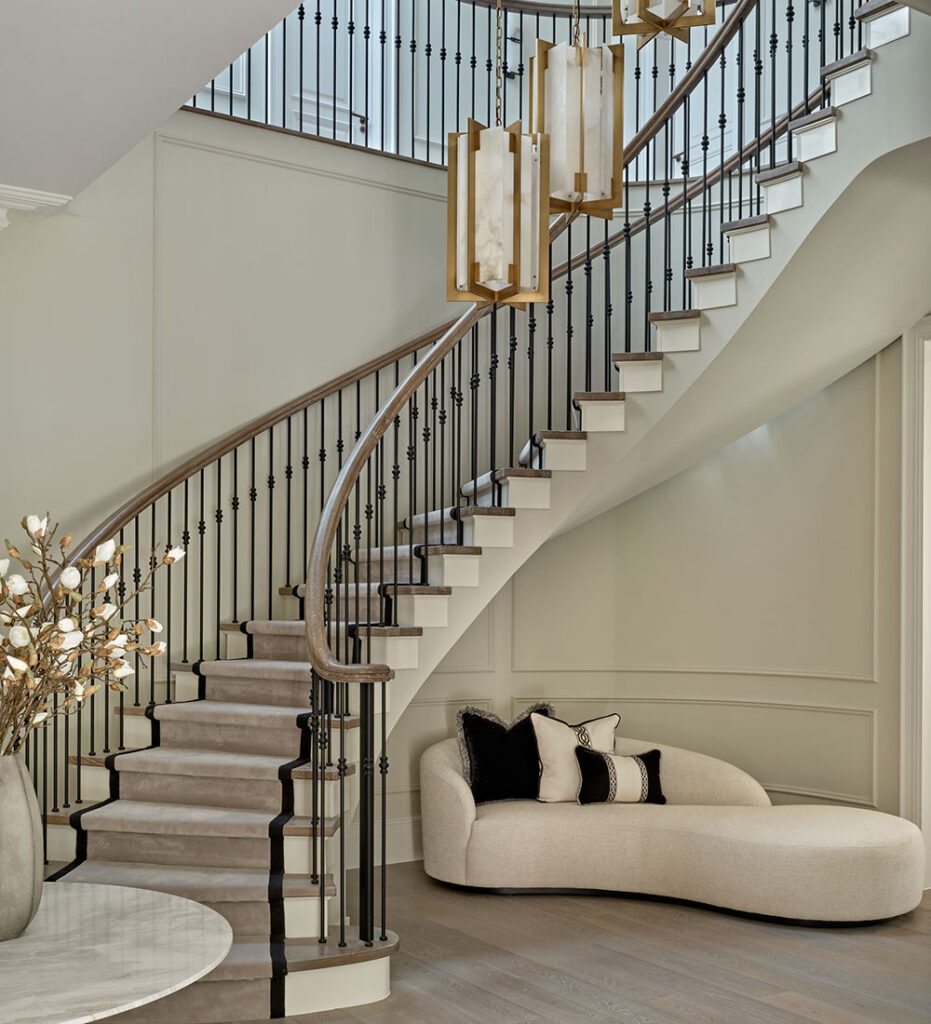
Even transitional spaces are considered. Landings, corridors and thresholds offer opportunities for moments of pause, rather than simply passages through the home.
Using furniture layout to create warmth and focus
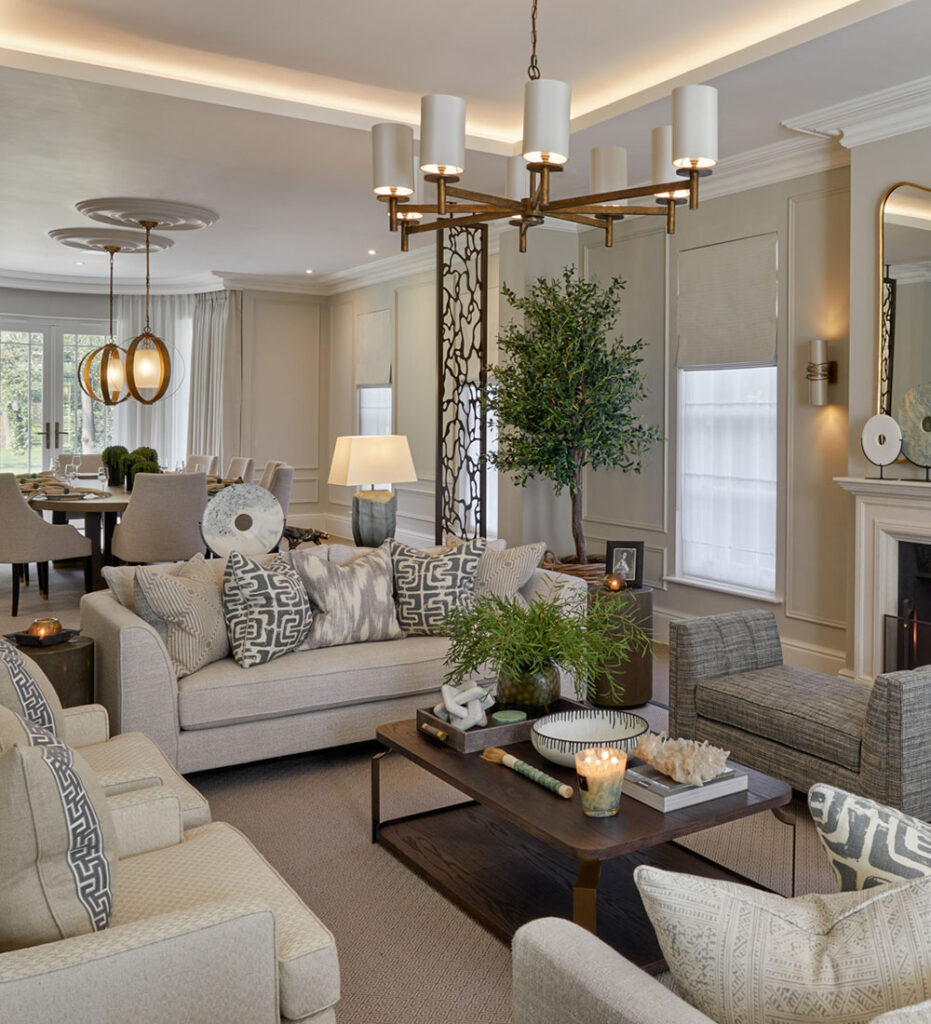
Once the spatial framework is in place, we use furniture to reinforce it. Placement is never arbitrary. Instead of pushing pieces to the perimeter, we draw arrangements inward to create a sense of focus.
A well-composed seating arrangement can transform the way a room is experienced, establishing intimacy within a larger volume. Rugs, tables and joinery work together to “anchor” each zone, ensuring it reads as a complete, intentional space.
Equally, we pay close attention to circulation. Movement through the home should feel natural and fluid. Wide, empty stretches are avoided in favour of gently guided pathways that connect spaces without exposing their full scale at once.
Designing for multifunctional living
A large home should feel dynamic, not static. We design spaces that can evolve throughout the day and across seasons, layering functionality in a way that feels seamless rather than forced.
A kitchen might extend into a relaxed seating area, allowing it to double as a social hub. Bedrooms often incorporate writing desks or reading niches, introducing a secondary purpose without compromising calm.
This approach ensures that rooms are used more frequently and in different ways, bringing a natural sense of life and warmth into the home.
How materials and texture add warmth to large rooms
Materiality plays a defining role in how a space is perceived. In larger rooms, we prioritise a balance of materials that bring tactile richness and depth.
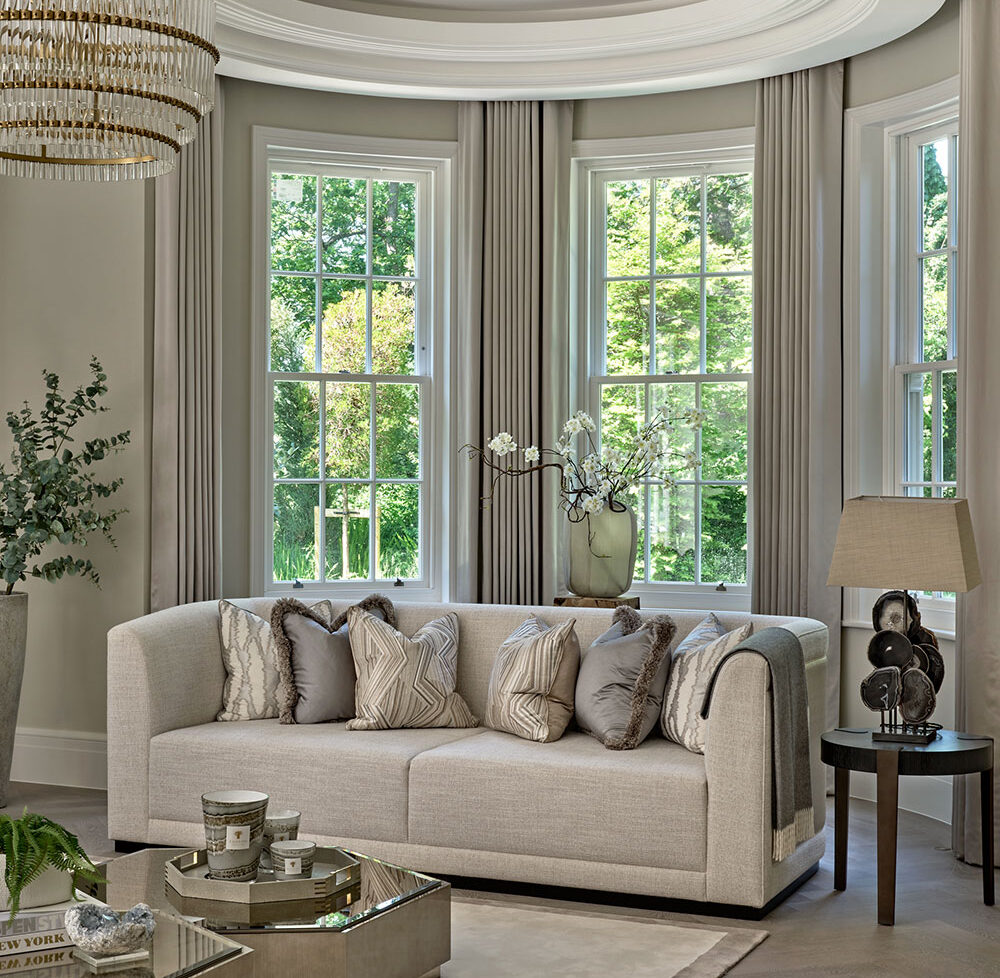
We often combine natural elements such as timber and stone with softer layers of upholstery, rugs and drapery. These elements help absorb both sound and visual scale, making rooms feel more grounded.
Detail is where much of the warmth resides. The refinement of joinery, the weight of a handle, or the depth of a skirting profile can subtly elevate an interior. These are not immediately obvious decisions, but collectively they shape how the space is experienced.
Getting scale and proportion right
One of the most common challenges in large homes is selecting pieces that feel appropriately scaled. Furniture that is too small tends to disappear, reinforcing a sense of emptiness.
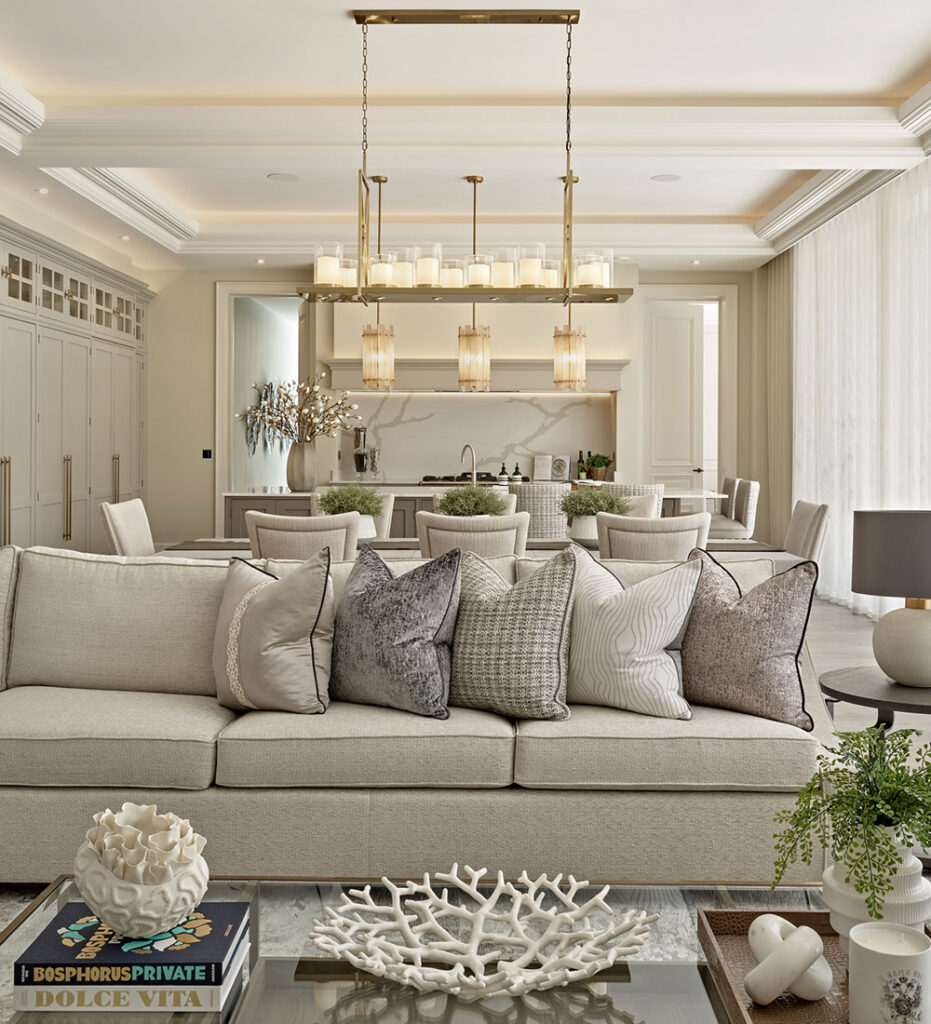
We counter this by introducing pieces with presence. Generous sofas, substantial dining tables and considered statement artworks help balance the volume of the room without introducing clutter.
Lighting is treated in the same way. A well-proportioned pendant or chandelier can define a space vertically, drawing attention to the architecture while also softening it.
Lighting as a design tool, not an afterthought
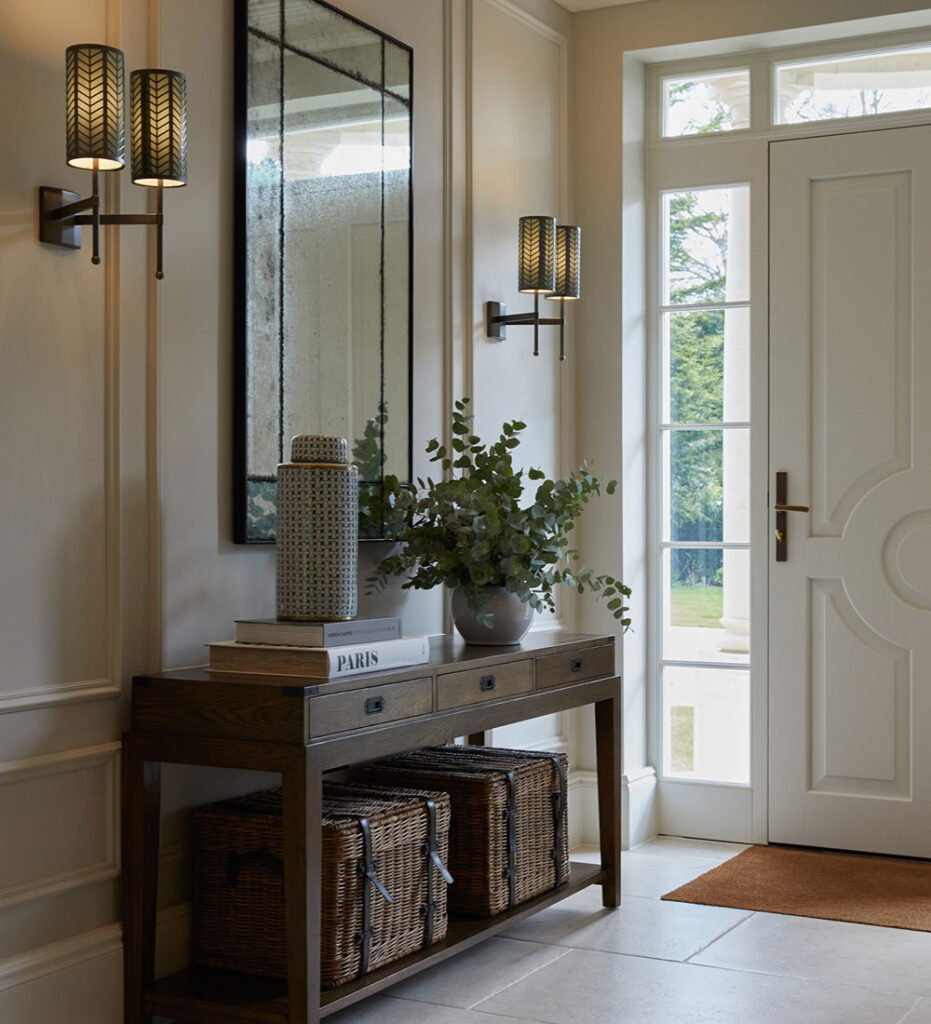
Lighting is one of the most powerful tools we use to create atmosphere. Rather than relying on a single overhead source, we design layered lighting schemes that respond to different needs and moods.
Ambient lighting forms the base layer, supported by task lighting for specific activities and accent lighting to add depth. This allows the home to shift seamlessly from functional during the day to more relaxed and atmospheric in the evening.
We also consider tone carefully. Warmer light temperatures and controlled intensity contribute significantly to a sense of comfort, particularly in expansive spaces.
Creating intimate moments within volume
In every large home, we look for opportunities to create moments of intimacy. These are the spaces people are naturally drawn to.
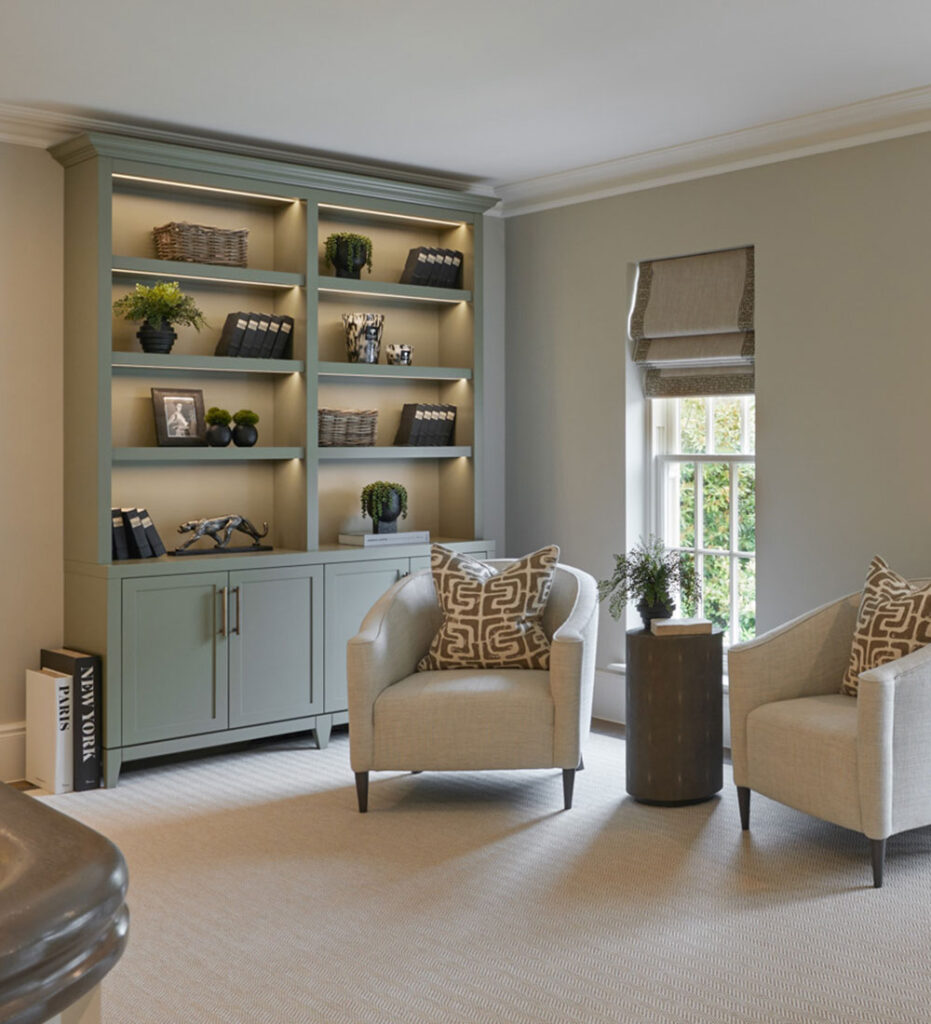
Focal points such as fireplaces, curated shelving or a piece of significant artwork help anchor the room visually. Around these, we build smaller compositions, whether through tighter seating arrangements or softer pools of light.
These moments create contrast, ensuring that the scale of the architecture never feels overwhelming.
How to keep a large home feeling cohesive throughout
With multiple rooms and extended sightlines, cohesion becomes essential. We develop a consistent design language that carries through the home, often through a restrained palette of materials, finishes and colours.
This does not mean repetition, but rather continuity. Each space can have its own identity, yet still feel connected to those around it. Transitions are carefully handled so that movement through the home feels considered and calm.
Why personal touches matter in large home design
A home of any size must ultimately feel personal. Without this, even the most carefully designed interior can feel staged.
We work with clients to incorporate art, books and objects that reflect their lives and interests. These elements add narrative, breaking the uniformity that can sometimes occur in larger properties.
Curated thoughtfully, they bring warmth in a way that cannot be achieved through design alone.
Balancing grandeur with comfort
Finally, we always seek to balance openness with enclosure. Large homes benefit from contrast. Expansive rooms feel more impactful when paired with smaller, more intimate spaces.
This might take the form of a snug, a library or a quiet alcove. These areas offer retreat and softness, creating a rhythm that makes the home feel inviting rather than overwhelming.
Making a large home feel warm: what it comes down to
Making a large home feel warm is ultimately a question of intent. The instinct is often to fill space, but the more considered approach is to shape it – through careful planning, appropriate scale, layered materiality and light that responds to how the home is lived in.
At Hill House Interiors, this is the work we do on every project – from London townhouses and Home Counties estates to larger international properties. When every decision is made with clarity and purpose, even the grandest home can feel quietly, effortlessly warm.
Thinking about a large home project?
Grand homes require a different kind of thinking from the outset. If you are planning a large-scale project and want to understand how warmth and livability can be built into the design from the beginning, we would welcome the conversation.