Guided, Not Hands-On: How Involved Do You Need to Be in Your Interior Design Project?
It is one of the first questions many clients ask – and for those managing demanding schedules or homes at a distance, it can feel particularly pressing.
The answer is reassuring: you do not need to oversee every detail. The most successful projects are built on a structured model of involvement – deeply engaged at the outset and at key milestones, with a lighter touch during execution.
Interior design, at its best, is a partnership. Your role is not to manage the process but to shape the vision, allowing your designer to interpret and execute it with precision.
Where your involvement matters most
Be clear and upfront at the start
The earliest stage of any project carries the greatest weight. During the initial consultation, your designer relies on you to articulate how you live, what you value, and what you aspire to create. This is not limited to aesthetic preference. It includes practical considerations such as how spaces are used, how frequently you entertain, and your expectations around comfort, longevity and maintenance.
Equally important is clarity around budget and scope. Establishing these parameters early creates a shared framework, reducing misalignment later and enabling more confident design decisions from the outset.
Actively participate in key decisions
As the scheme develops, your involvement becomes more selective but no less important. You will be invited to review and approve concept designs, layouts, materials and final selections. These are the moments where your perspective ensures the scheme remains personal and relevant.
A considered response at this stage shapes the outcome far more than ongoing commentary. For us, it allows us to refine the project with confidence, knowing it reflects your sensibilities.
Provide honest and timely feedback
Clarity, again, is essential. We are adept at interpretation, but we’re not mind readers. Open, direct feedback early in the process prevents costly revisions and helps maintain momentum.
It is not necessary to justify every preference in detail. Simply articulating what resonates and what does not is sufficient. What matters is that feedback is offered promptly, while decisions remain flexible.
Stay responsive and decisive
Design projects are inherently interconnected. A delay in one decision can ripple through the entire schedule, affecting procurement, installation and ultimately cost.
Being available at agreed decision points and responding efficiently allows the project to progress smoothly. This is particularly important for clients managing projects remotely, where clarity and timing become even more critical.

Where to step back in your interior design project
Day-to-day project management: leave this to your designer
Once the design direction is established, much of the work shifts into coordination. Contractors are briefed, orders are placed, timelines are managed, and issues are resolved as they arise.
This is our realm as your designer. Over-involvement here can unintentionally disrupt workflow or blur responsibilities. Trusting your designer to manage these moving parts ensures a more cohesive and efficient process.
Technical and design execution
The translation of concept into reality demands technical expertise. From spatial planning and joinery detailing to material specification and lighting calibration, these elements require both experience and a trained eye.
Stepping back at this stage does not mean disengagement. It reflects a trust in the professional judgement that underpins a well-resolved scheme. It is this expertise that ensures the finished space feels balanced, intentional and enduring.
What the right level of client involvement looks like
A collaborative approach, not a controlling one
The most rewarding projects are those built on mutual respect. You bring insight into your lifestyle and aspirations. Our design team brings structure, creativity and technical fluency. When these perspectives are aligned, the process becomes both efficient and enjoyable.
How structured communication keeps your project on track
Rather than constant input, expect a more measured rhythm. Regular updates, scheduled reviews and clear decision points replace ad hoc communication. This structure provides clarity, allowing you to remain informed without being overwhelmed.
Setting aligned expectations from the start
Understanding when your input is required and how decisions influence timeline and budget removes uncertainty on both sides. It sets the tone for a process that feels considered rather than reactive.


How to find the right balance of involvement in your design project
Too little involvement can result in a scheme that feels resolved but lacks personal resonance. Too much involvement, however, often leads to delays, indecision and a dilution of the overall vision.
The balance is simple, though not always instinctive. Be deeply engaged at the beginning and at key milestones. Step back during execution. Remain available, but not omnipresent.
The right level of involvement: what to remember
A client’s role in an interior design project is not to manage every detail, but to guide its direction. Be deeply engaged at the start and at key decision points. Step back during execution. Remain available, but not omnipresent. With that balance in place, your designer can do their best work – and the result will feel both resolved and distinctly your own.
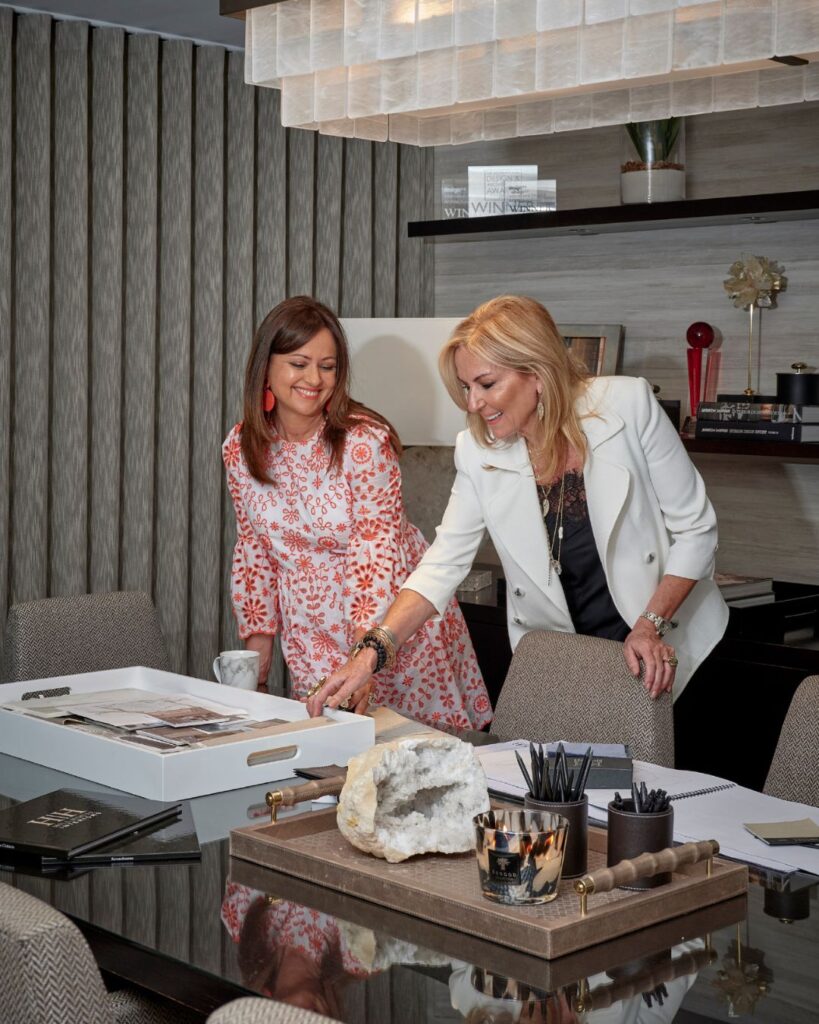
At Hill House Interiors, this model of involvement has been refined across more than two decades of award-winning residential work. Co-founders Helen Bygraves and Jenny Weiss are personally involved at each stage, ensuring that however hands-off a client needs to be day-to-day, the vision is always protected and the outcome always considered.
Ready to discuss your project?
Whether you are planning a London residence, a Home Counties family home or an international property, we offer an initial consultation to understand your project and establish the right level of involvement for you. It is an unhurried conversation – and the natural first step.